Buried Treasure: Mom's Apple Pie - Mom's Apple Pie #2 (1973)
Today I'm rerunning a very interesting post that appeared here all the way
back in April 2012. Later, it was discovered by Mom's Apple Pie's first
manager, Larry Patterson, who published a brief comment about what I
wrote.
 The ten piece horn-rock ensemble, Mom's Apple Pie, is remembered by record
collectors more for the famously obscene cover from their eponymous, first LP (1972) than
they are for their music. Let me be as delicate as possible. The artwork
featuring the sexually explicit, steaming apple pie "Mom" is holding can be seen
on the group's
Wikipedia page
and elsewhere on the Internet. I'm not posting it here because it may make some
readers uncomfortable. Check it out on your own if you're interested.
The ten piece horn-rock ensemble, Mom's Apple Pie, is remembered by record
collectors more for the famously obscene cover from their eponymous, first LP (1972) than
they are for their music. Let me be as delicate as possible. The artwork
featuring the sexually explicit, steaming apple pie "Mom" is holding can be seen
on the group's
Wikipedia page
and elsewhere on the Internet. I'm not posting it here because it may make some
readers uncomfortable. Check it out on your own if you're interested.
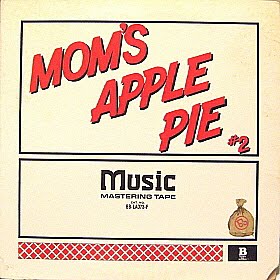
The cover of the Ohio band's second album (1973) - shown on the left - is far more
mundane.
Horn bands were still all the rage in '72 and Mom's Apple Pie tried very
hard to cash in. The large outfit started making some noise and they were
eventually able to open for big names such as The Doobie Brothers and
David Bowie. They were signed to the late Terry Knight's record company,
Brown Bag Records. Knight was best known for previously producing Grand
Funk Railroad and Bloodrock.
The horns usually played only as a unit and hardly ever took a solo. Their
two lead singers, Tony Gigliotti and Bob Fiorino, were similarly styled,
full-voiced tenors and they sounded as if the vocal trio from Three Dog
Night were fronting Chicago. Their songs were mostly self-written and
revealed some obvious talent even though their lyrics weren't particularly
deep and their arrangements lacked the adventurousness of the highly
successful Windy City septet. An even better comparison might be
Lighthouse ("One Fine Morning" and "Pretty Lady"). If you're
familiar with that Canadian group, you'll understand Mom's Apple Pie.
I’ve owned Mom’s Apple Pie 2 since its release, but I probably
haven't given it a spin in over thirty years, so while looking for
inspiration for today's post, I pulled it out for a listen. The platter
sounds exactly how I remembered it: pleasant, if not arty, and too
middle-of the-road to be engulfed by the controversy over the cover. The
music press wrote far more about that scandalous pie than they ever did
about the notes that sprang from the grooves of the record, so
unfortunately the cover became an albatross that contributed heavily to
their becoming a lost band of the classic rock era.


There's certainly a danger in going too far in the other direction with album design. MUSIC PLUS 0NE albums had better covers than this one.
ReplyDeletethat cover killed the band
ReplyDeleteI was their original manager